Concrete Slab & Foundation Work
We build strong, level concrete slabs and foundations that last for decades in Quincy and the surrounding area.
Why Your Foundation Matters
Your foundation is the backbone of your entire property. Whether you are building a new home, garage, shed, or addition, the quality of your concrete slab determines how well your structure holds up over time. In Quincy, where soil conditions and weather patterns can shift throughout the year, having a properly poured and reinforced foundation is not optional. It is essential.
We have poured hundreds of slabs across Adams County, and we know exactly how to prepare the ground, grade the site, and pour concrete that stays level and crack-free for years. From residential projects in Quincy to larger commercial builds, we handle every step with precision and care.
A bad foundation means cracks, uneven floors, and expensive repairs down the road. A good foundation means peace of mind. We make sure you get the latter.
What Goes Into a Quality Concrete Slab
Pouring a slab is not as simple as dumping concrete and smoothing it out. There is a process, and every step matters. Here is how we do it right.
Site Preparation
Before any concrete gets mixed, we prepare the ground. That means removing topsoil, grading the area to ensure proper drainage, and compacting the base. If the base is not solid, the slab will settle unevenly and crack. We do not skip this step.
Reinforcement and Formwork
Once the base is ready, we set up forms to shape the slab and add steel reinforcement where needed. Rebar or wire mesh helps the concrete resist cracking and adds strength to the entire structure. This is especially important for larger slabs or areas that will support heavy loads.
Pouring and Finishing
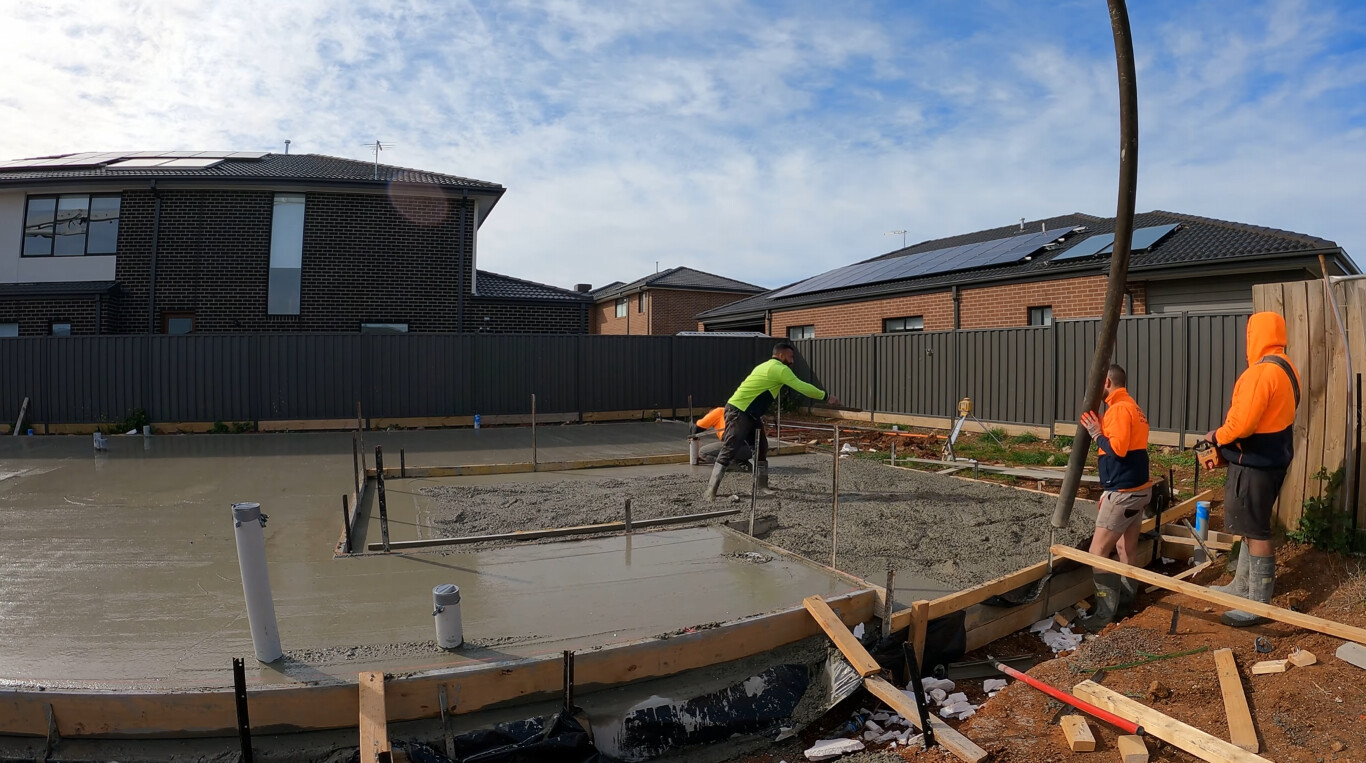
We pour the concrete evenly and work quickly to prevent cold joints or weak spots. Once the concrete is in place, we smooth, level, and finish the surface. Depending on your needs, we can create a smooth finish, a broom finish for traction, or prepare the slab for flooring installation.
Each slab is custom to your project. Whether you need a simple pad for a shed or a full basement foundation, we tailor our approach to fit your exact requirements.
Common Foundation Projects We Handle
We work on a wide range of foundation and slab projects throughout Quincy and the surrounding communities. Here are some of the most common jobs we take on.
- House Foundations: Full basement walls, crawl space slabs, and slab-on-grade foundations for new home construction.
- Garage Slabs: Reinforced slabs designed to handle vehicle weight and daily use without cracking or sinking.
- Shed and Outbuilding Pads: Level, compact slabs that provide a solid base for storage buildings, workshops, and more.
- Barn and Agricultural Foundations: Heavy-duty slabs built to support equipment, livestock structures, and farm operations.
- Commercial Foundations: Larger-scale slabs for retail spaces, warehouses, and light industrial buildings.
No matter what you are building, we make sure your foundation is strong, level, and built to code. We also work closely with local inspectors to ensure every project passes inspection the first time.
If you are planning a build and need reliable concrete driveway installation or patio work alongside your foundation, we can coordinate everything to keep your project on schedule.